

 Send Inquiry
Industrial Bostwick Consistometer
Price 50000 INR/ Piece
MOQ : 1 Piece
Industrial Bostwick Consistometer Specification
- Usage
- Industrial
- Dimension (L*W*H)
- 17x3-1/4 Inch (in)
- Material
- Stainless Steel
- Max Height
- 110 mm and 139 mm
- Product Type
- Industrial Bostwick Consistometer
- Automation Grade
- manual
- Color
- Silver
- Weight
- 2 Pound (lb)
- Capacity
- 75 Milliliter (ML)
Industrial Bostwick Consistometer Trade Information
- Minimum Order Quantity
- 1 Piece
- Supply Ability
- 4000 Pieces Per Month
- Delivery Time
- 1-2 Week
- Main Domestic Market
- All India
Industrial Bostwick Consistometer About
Industrial Bostwick Consistometer is utilized for the measurement the consistency of fluids or semi-solids. It is usually utilized in the food industry for determining the consistency of gravies, sauces, and various other allied products. This kind of device has a flat, inclined plate with a groove beside its length. A sample of the fluids is put in the groove, and the plate is tilted to a indicated angle. Industrial Bostwick Consistometer is mainly useful to measure the consistency of a variety of viscous products, like ketchup or mustard. The product flow rate of is affected by factors like viscosity, temperature, and shear rate.
Precise Quality Assessment
This consistometer delivers consistent and repeatable results when determining the viscosity and flow behavior of liquid chemicals or polymer samples. The manual operation ensures operator control, making it suitable for laboratories and industrial environments that require absolute precision in quality checks.
Robust and Hygienic Construction
Built from premium stainless steel, the Bostwick Consistometer offers excellent corrosion resistance and is easy to clean, contributing to a long operational lifespan. The silver color and sturdy construction make it both attractive and functional for rigorous industrial applications.
FAQ's of Industrial Bostwick Consistometer:
Q: How does the Bostwick Consistometer measure the consistency of liquid chemicals and polymers?
A: The Bostwick Consistometer works by allowing a set volume (up to 75 mL) of the liquid sample to flow along a graduated trough for a specified time. The distance covered provides a direct measure of the sample's viscosity and consistency.Q: What is the process for using the manual Industrial Bostwick Consistometer?
A: To use the device, place it on a level surface, fill the trough with the test sample, and release the gate. After a set time interval, measure the distance traveled by the sample to assess its flow properties.Q: When should I use this consistometer during manufacturing or quality control?
A: The consistometer is best employed during both the research and development phase and routine quality control, to ensure batch consistency and to monitor physical properties of chemicals or polymers.Q: Where should the Industrial Bostwick Consistometer be installed for optimal performance?
A: Install the device in a controlled laboratory or industrial quality control area with a stable, flat surface to guarantee accurate measurements.Q: What are the main benefits of using a stainless steel, manual Bostwick Consistometer?
A: Key benefits include easy cleaning, robust resistance to corrosive chemicals, precise manual operation, and suitability for a wide variety of industrial liquid samples.Q: Can the Bostwick Consistometer be used for products other than polymers and chemicals?
A: While designed primarily for liquid chemicals and polymers, it can also be used to assess the consistency of other viscous liquids, provided their flow characteristics fall within its measurement range.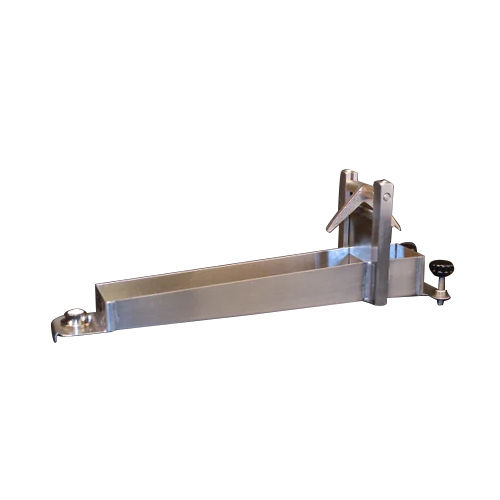
Tell us about your requirement

Price:
Quantity
Select Unit
- 50
- 100
- 200
- 250
- 500
- 1000+
Additional detail
Mobile number
Email


Contact Details

- Unit No- 103, Western Edge-II, Opp. Magathane Bus Depot, Borivali East,Mumbai - 400066, Maharashtra, India
- Phone : 07971190641
ATAGO INDIA INSTRUMENTS PVT. LTD.
GST : 27AAFCA0417K1ZV

- Mr Jayendra (Manager)
- Mobile : 07971190641
- Send Inquiry
 Send Inquiry
|

Our Products
 Send Inquiry
 Send SMS
Developed and Managed by Infocom Network Private Limited.


